Salt water pools have become a popular alternative to traditional swimming pools, but their name can be slightly misleading. A salt water pool is not completely free of chlorine, nor does it contain as much salt as the ocean. Instead, it uses dissolved salt and a special device called a salt chlorine generator to produce chlorine inside the pool system.
This process keeps the water clean without requiring the owner to add chlorine manually as often. The result is usually water that feels softer, has a less noticeable chlorine smell, and may be gentler on the eyes and skin.
Understanding how a salt water pool works can help you decide whether this system is suitable for your home. It also makes the pool easier to maintain once it has been installed.
What Is a Salt Water Pool?
A salt water pool is a swimming pool that uses a salt chlorination system to sanitize the water. Pool-grade salt is dissolved in the water, and the filtration system carries that saltwater through an electrolytic cell.
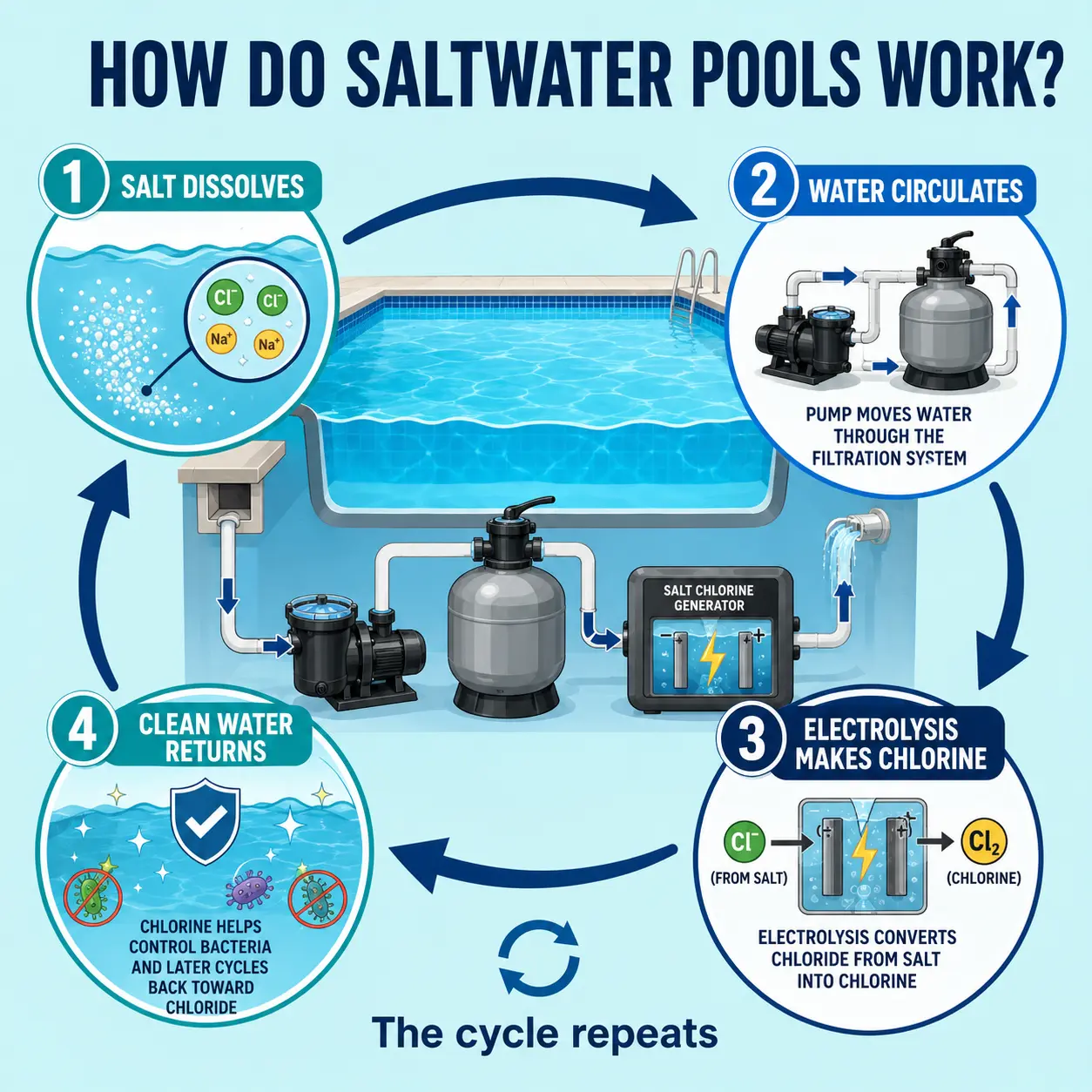
Inside the cell, an electrical process converts part of the dissolved salt into chlorine. That chlorine destroys bacteria, algae, and other unwanted organisms before gradually changing back into salt. The system repeats this cycle whenever the pool pump and chlorine generator are operating.
In practical terms, a salt water pool is still a chlorine pool. The main difference is how the chlorine enters the water.
In a conventional pool, the owner adds chlorine in the form of liquid, tablets, granules, or another chemical product. In a salt water pool, the equipment produces a controlled supply of chlorine from the salt already present in the water.
How Does a Salt Water Pool Produce Chlorine?
The main component of a salt water pool is the salt chlorine generator, which is also known as a salt chlorinator. The generator typically includes a control unit and an electrolytic cell installed in the pool’s plumbing.
The process works in several stages.
1. Salt Is Added to the Pool
The pool owner adds a measured amount of pool-grade salt directly to the water. The salt dissolves and circulates throughout the pool.
Most salt chlorination systems operate at a concentration of roughly 2,500 to 3,500 parts per million, although the correct level depends on the equipment manufacturer. This is far below the salt concentration of seawater, which is approximately 35,000 parts per million.
Because the salt level is relatively low, the water usually has only a mild salty taste. Some swimmers may not notice it at all.
2. Saltwater Enters the Filtration System
The pool pump pulls water through the skimmer and main drain. The water moves through the filter, where dirt and physical debris are removed.
After filtration, the water passes through the salt cell. This is where chlorine production takes place.
3. Electrolysis Converts Salt Into Chlorine
The salt cell contains metal plates coated with materials designed to support an electrochemical reaction. When the control unit sends a low-voltage electrical current through the cell, it separates the salt molecules in the water.
This process, called electrolysis, produces active chlorine compounds. These compounds enter the pool water and act as sanitizers.
4. Chlorine Sanitizes the Water
The newly produced chlorine attacks bacteria, algae, viruses, and organic contaminants. It works in essentially the same way as chlorine added to a conventional pool.
Sunlight, heat, swimmers, and contaminants gradually consume the available chlorine. The generator continues producing more while the system is running, helping maintain a steady sanitizer level.
5. Chlorine Returns to Salt
After completing its sanitizing work, much of the chlorine eventually changes back into dissolved chloride. The system can then use it again during another chlorination cycle.
Salt is not permanently used up every time chlorine is produced. However, the pool can still lose salt through splashing, backwashing, leaks, overflow, and water drainage. Fresh water added after these losses may dilute the remaining salt.
Does a Salt Water Pool Contain Chlorine?
Yes, a salt water pool contains chlorine.
The idea that salt water pools are chlorine-free is one of the most common misunderstandings about them. These pools depend on chlorine for sanitation, just as traditional pools do. They simply generate chlorine gradually instead of relying mainly on manually added products.
A properly maintained salt system often keeps a more consistent chlorine level. This can reduce the sharp chemical smell associated with poorly balanced conventional pools.
That familiar “chlorine smell” is often caused by chloramines. These compounds form when chlorine reacts with sweat, body oils, urine, and other contaminants. A strong smell can therefore indicate a water-quality problem rather than an excessive amount of clean, active chlorine.
What Equipment Does a Salt Water Pool Need?
A salt water pool requires most of the same equipment as a conventional pool, including:
A circulation pump
A pool filter
Skimmers and drains
Return lines
A water-testing method
A cleaning system or pool vacuum
The major additional component is the salt chlorine generator.
Salt Cell
The salt cell is installed in the return plumbing, generally after the filter and heater. It contains the plates that convert dissolved salt into chlorine.
Salt cells do not last forever. Mineral buildup and normal wear gradually reduce their performance. Cleaning the cell when necessary and maintaining balanced water can help extend its usable life.
Control Unit
The control unit supplies power to the cell and regulates chlorine production. Depending on the system, the owner may be able to adjust the production rate, review salt readings, or receive warnings about flow and cell condition.
Pool Salt
Salt systems require high-purity salt intended for swimming pools. Products containing unwanted additives or minerals can cause staining, cloudy water, or equipment problems.
Salt usually needs to be added only when the concentration becomes too low. It should not be poured into the pool automatically without first testing the water.
What Does Salt Water Pool Water Feel Like?
Many swimmers describe salt water pool water as softer or smoother than water in a traditional pool. The lower and more consistent chlorine level may also reduce the dry feeling that some people experience after swimming.
However, individual reactions vary. Salt water can still irritate sensitive eyes or skin if the water chemistry is unbalanced. A salt system does not remove the need to monitor pH, chlorine, alkalinity, and other chemical levels.
Water quality depends more on proper maintenance than on the label attached to the sanitation system.
Benefits of a Salt Water Pool
Salt water pools offer several practical advantages when they are installed and maintained correctly.
More Consistent Chlorine Production
The generator can produce chlorine whenever the circulation system is running. This steady production may reduce sudden changes in sanitizer levels.
Less Routine Handling of Chlorine
Owners generally do not need to store or add large amounts of chlorine as frequently. Supplemental chlorine may still be necessary after heavy use, severe weather, equipment failure, or an algae problem.
Softer-Feeling Water
The dissolved salt and stable chemical levels often give the water a smoother feel. Many swimmers also notice less of a chemical odor.
Potentially Lower Ongoing Chemical Costs
Salt is usually inexpensive, and the system reuses it through repeated chlorination cycles. Routine chemical expenses may therefore be lower than those of some conventional pools.
These savings should be weighed against the initial cost of the chlorinator and the eventual cost of replacing the salt cell.
Convenient Daily Sanitation
Once the production rate is set correctly, the generator handles much of the routine chlorine supply. The pool still requires testing and cleaning, but daily sanitation can become more convenient.
Disadvantages of a Salt Water Pool
A salt water system is not maintenance-free, and it may not be the best choice for every property.
Higher Installation Cost
The chlorine generator and electrical installation increase the initial cost. Converting an existing pool can also require plumbing changes.
Salt Cell Replacement
The electrolytic cell wears out over time. Replacement intervals vary according to cell quality, water balance, operating hours, and cleaning practices.
Risk of Corrosion
Salt can accelerate corrosion in certain metals, fixtures, heaters, ladders, light housings, and surrounding materials. Poorly sealed natural stone and some types of concrete may also be affected by repeated exposure to saltwater.
Using compatible materials and keeping the salt concentration within the recommended range can reduce this risk.
Rising pH
Salt water pools often experience a gradual rise in pH. Owners may need to add acid periodically to keep the water properly balanced.
Reduced Production in Cold Water
Many salt chlorine generators become less effective or stop producing chlorine when the water temperature falls below a certain level. During colder periods, the pool may require another source of chlorine.
Scale on the Salt Cell
Calcium deposits can form on the cell plates, especially when the water has high calcium hardness or an elevated pH. Excessive scale interferes with chlorine production and may shorten the life of the cell.
How to Maintain a Salt Water Pool
Salt water pool maintenance is manageable, but it must be done consistently.
Test the Water Regularly
Check the free chlorine and pH several times a week during the swimming season. Test alkalinity, stabilizer, salt, and calcium hardness at appropriate intervals.
Do not depend entirely on the readings displayed by the generator. Confirm important measurements with a reliable water-testing kit.
Maintain the Correct Salt Level
Follow the generator manufacturer’s recommended range. Too little salt may prevent the cell from producing enough chlorine. Too much can trigger system warnings and increase the risk of corrosion.
If the salt level is high, the usual correction is to drain part of the pool and replace that water with fresh water.
Inspect the Salt Cell
Check the cell for mineral deposits and clean it only when required. Unnecessary or overly aggressive acid cleaning can damage the cell’s coating and reduce its lifespan.
Always follow the equipment manufacturer’s cleaning instructions.
Monitor the pH
Salt pools often need regular pH adjustments. High pH can reduce chlorine effectiveness, encourage scale, and make the water cloudy.
Keep the Pool Clean
Brush the walls, vacuum the floor, empty the baskets, and clean or backwash the filter as needed. A chlorine generator sanitizes the water, but it cannot remove leaves, dirt, or physical debris.
Adjust Chlorine Production
Chlorine demand changes with temperature, sunlight, rainfall, swimmer activity, and the length of time the pump operates. The generator output may need to be increased during hot or busy periods and reduced when demand falls.
Salt Water Pool vs. Traditional Chlorine Pool
The two systems use the same primary sanitizer, but they deliver it differently.
| Feature | Salt Water Pool | Traditional Chlorine Pool |
|---|---|---|
| Chlorine source | Produced from dissolved salt | Added manually |
| Initial cost | Usually higher | Usually lower |
| Routine chemical handling | Less frequent | More frequent |
| Water feel | Often softer | Depends on water balance |
| Equipment needs | Requires a salt generator | No salt generator required |
| Corrosion concerns | Greater if materials are unsuitable | Generally lower |
| Maintenance | Regular testing and cell care | Regular testing and chlorine dosing |
Neither option is automatically healthier or cleaner. A properly maintained pool of either type can provide safe, clear water. The better choice depends on budget, equipment preferences, climate, construction materials, and willingness to perform routine maintenance.
Can an Existing Pool Be Converted to Salt Water?
Many existing pools can be converted to a salt water system. The process usually involves installing a chlorine generator in the plumbing, connecting its control unit, adding the correct amount of salt, and balancing the water.
Before converting, the pool and surrounding area should be checked for salt-sensitive materials. Older metal equipment, some heaters, natural stone, and poorly protected fixtures may require upgrades or additional protection.
The chlorine generator must also be sized correctly. A unit that is too small may struggle to maintain safe chlorine levels during warm weather or periods of heavy use. Choosing a system with more capacity than the pool’s exact volume can provide useful operating flexibility.
Common Myths About Salt Water Pools
“Salt Water Pools Have No Chlorine”
They produce their own chlorine from salt. Chlorine remains the primary sanitizer.
“The Water Is Like Ocean Water”
Pool water contains only a small fraction of the salt found in the ocean. It should not feel or taste like seawater when the system is properly balanced.
“Salt Water Pools Need No Maintenance”
They still require water testing, cleaning, filtration, chemical adjustments, and equipment inspections.
“Salt Never Needs to Be Replaced”
Salt remains in the water, but some is lost through splash-out, leaks, backwashing, overflow, and draining.
“A Salt System Prevents All Algae”
Algae can still develop if chlorine production is too low, circulation is poor, or the water chemistry is out of balance.
Frequently Asked Questions
How long should a salt water pool system run each day?
The correct operating time depends on the pool size, pump flow, water temperature, chlorine demand, and generator output. Many systems operate for several hours a day, but water-test results should determine the final schedule.
Can you swim while the salt generator is running?
In most properly installed systems, swimming while the generator operates is normal. The equipment should be professionally installed, grounded, and maintained according to local electrical requirements and the manufacturer’s instructions.
Do salt water pools need to be shocked?
They may occasionally need additional chlorine after storms, heavy swimmer use, algae growth, or other contamination. Some generators include a temporary high-output setting, but severe water problems may require a separate chlorine treatment.
Can regular table salt be used in a pool?
Pool-grade salt is the safer choice because it is designed to dissolve cleanly and has fewer unwanted additives. Some household salts contain anti-caking agents, iodine, or minerals that are not suitable for pool use.
Are salt water pools easier to maintain?
They can reduce the need for frequent manual chlorine dosing, but they still need consistent care. Regular testing, pH control, cell inspection, and physical cleaning remain essential.
Is a salt water pool worth it?
A salt water pool may be worthwhile for someone who values softer-feeling water and more automated chlorine production. It may be less appealing when installation cost, corrosion concerns, or future cell replacement are major priorities.
Final Thoughts
So, how do salt water pools work? They use a chlorine generator to convert dissolved salt into chlorine through electrolysis. The chlorine sanitizes the water and eventually returns to a form that the system can use again.
This approach can provide steady sanitation, reduce routine handling of chlorine products, and create water that many swimmers find more comfortable. However, a salt water pool still needs regular testing, cleaning, pH adjustment, and equipment care.
The system offers convenience rather than freedom from maintenance. When the pool is properly designed and the water remains balanced, salt chlorination can be an effective and comfortable way to keep a swimming pool clean.
Need to Calculate Salt for Your Pool?
Use our free calculator to find how many pounds or kilograms of salt to add based on your pool volume and current salt reading.
Use the Calculator →