
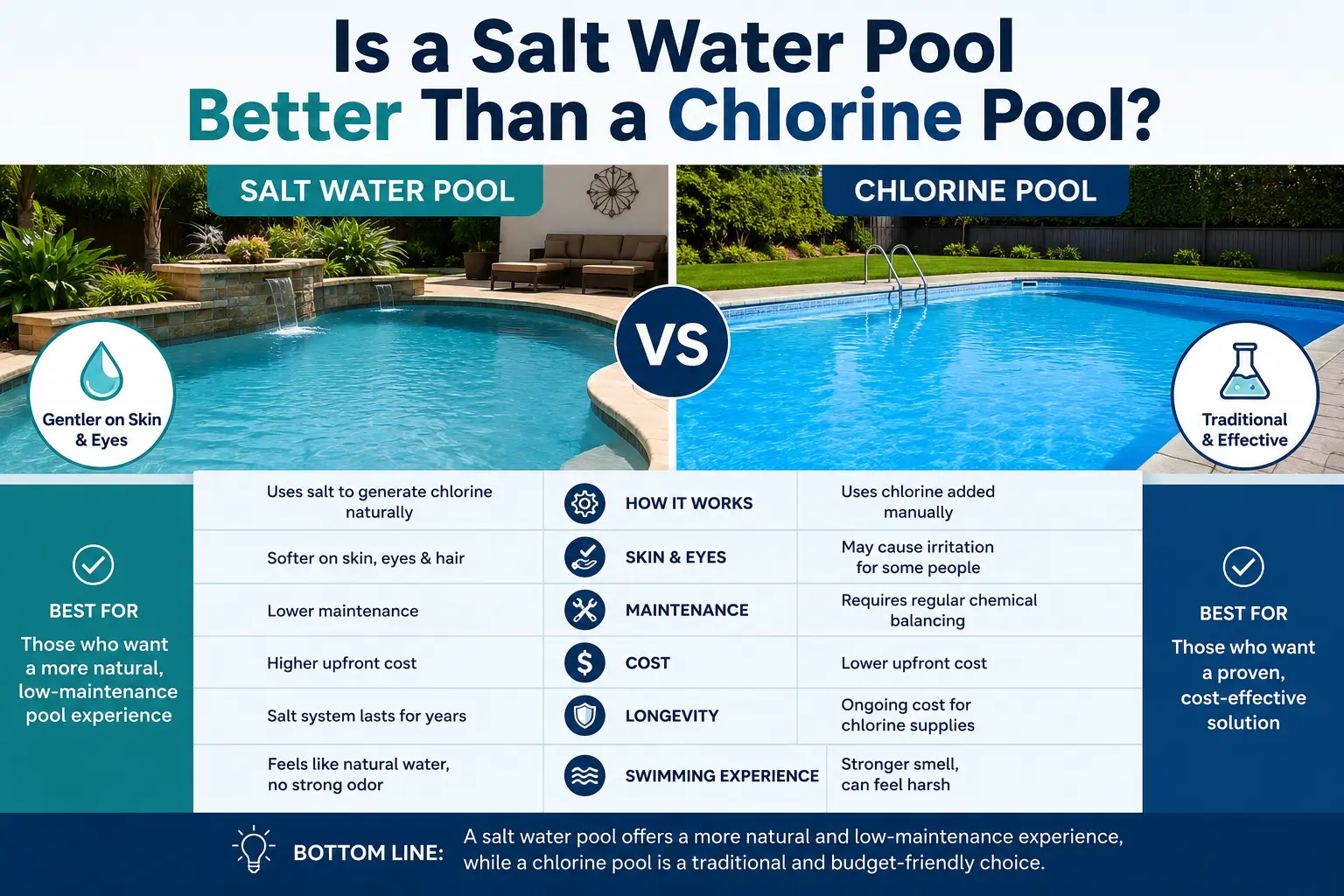
A salt water pool can be better than a traditional chlorine pool if you prefer more automatic chlorine production, softer-feeling water, and less frequent handling of chlorine products. A traditional chlorine pool may be better if you want a lower installation cost, simpler equipment, and greater control over when chlorine is added.
Neither option is best for every pool owner. Your ideal choice depends on your budget, pool materials, climate, maintenance habits, and expectations.
It is also important to understand that both systems use chlorine. A salt water pool simply produces chlorine from dissolved salt, while a traditional pool requires chlorine to be added directly.
Salt Water Pool vs. Chlorine Pool: Quick Comparison
| Feature | Salt Water Pool | Traditional Chlorine Pool |
|---|---|---|
| Primary sanitizer | Chlorine produced from salt | Manually added chlorine |
| Initial cost | Higher | Lower |
| Routine chlorine handling | Less frequent | More frequent |
| Water feel | Often described as softer | Depends on chemical balance |
| Chlorine delivery | Slow and continuous | Added in separate doses |
| Specialized equipment | Requires a generator and salt cell | Uses standard pool equipment |
| Equipment repairs | Cell and control unit may need service | Fewer specialized parts |
| Corrosion risk | Higher if salt or chemistry is poorly managed | Generally lower |
| Cold-weather performance | Chlorine production may slow or stop | Chlorine can be added in any season |
| Best for | Convenience and steady chlorination | Simplicity and lower startup cost |
How Are Salt Water and Chlorine Pools Different?
The main difference is how chlorine enters the water.
A traditional chlorine pool is sanitized by adding liquid chlorine, tablets, granules, or another chlorine product. The pool owner tests the water and adds the amount needed to maintain a safe sanitizer level.
A salt water pool uses a salt chlorine generator. Salt is dissolved in the pool water, and the circulation system carries that water through an electrolytic cell. The cell uses electricity to convert part of the dissolved salt into chlorine.
The chlorine then kills bacteria and helps control algae. Salt systems do not eliminate chlorine or replace it with salt. They automate the way chlorine is supplied.
Regardless of the system, maintaining an appropriate chlorine level and balanced pH is essential. The CDC recommends at least 1 part per million of chlorine in pools, or at least 2 parts per million when cyanuric acid is being used, along with a pH between 7.0 and 7.8. Local requirements and product instructions may differ. CDC pool treatment guidance
Advantages of a Salt Water Pool
Salt water pools are popular because they can make routine sanitation more convenient. Their main benefits involve chlorine delivery, water comfort, and reduced chemical handling.
More Consistent Chlorine Production
A salt generator produces chlorine gradually while the pump and chlorination system are operating. This can help maintain a steadier sanitizer level.
Traditional pools may experience larger changes after chlorine is added. The concentration rises after treatment and then falls as sunlight and contaminants consume it.
Consistent production does not mean the water can be ignored. The output still needs to be adjusted according to test results, water temperature, weather, and swimmer activity.
Less Frequent Handling of Chlorine Products
Salt pool owners generally do not need to carry, store, or add chlorine as frequently during normal operation. This is useful for people who find regular dosing inconvenient.
Occasional manual chlorine treatment may still be required after heavy use, storms, equipment problems, or an algae outbreak.
Softer-Feeling Water
Many swimmers describe salt water as smoother or softer. The salt concentration is much lower than that of ocean water, so a properly managed pool should not feel like swimming in the sea.
Comfort also depends on the complete water balance. Incorrect pH or excessive chloramines can cause irritation in either type of pool.
Less Noticeable Chemical Odor
A well-maintained salt pool may have a less noticeable chemical smell because chlorine is produced steadily. However, the familiar pool odor is often associated with chloramines, which form when chlorine reacts with sweat, dirt, and other contaminants.
A strong smell can occur in either system when the water is not properly managed. The CDC notes that chloramines can irritate the eyes and lungs. CDC guidance on chloramines
Lower Routine Chlorine Purchases
Once the system is operating, it can reduce the amount of packaged chlorine needed for ordinary sanitation. Salt is not consumed as quickly because it is repeatedly converted and recycled within the water.
However, lower routine chemical spending does not always mean a lower total cost. The generator requires electricity, and the salt cell will eventually need replacement.
Disadvantages of a Salt Water Pool
A salt water pool offers convenience, but its equipment and water chemistry introduce additional responsibilities.
Higher Initial Cost
The pool needs a chlorine generator, salt cell, electrical connection, and compatible plumbing. Converting an existing pool may also require professional installation.
This makes the initial cost higher than that of a conventional chlorine system.
Salt Cell Replacement
The electrolytic cell wears out over time. Its working life depends on the model, operating hours, chlorine output, water balance, mineral buildup, and cleaning practices.
Replacing the cell can be a significant maintenance expense. Warranty terms also vary by manufacturer and product, so they should be checked before choosing a system.
Potential Corrosion
Salt can contribute to corrosion when its concentration is excessive or when water chemistry is poorly controlled. Metal fixtures, ladders, heaters, light components, and some poolside materials may be vulnerable.
Manufacturer guidance warns that high salt can increase the risk of damage to pool equipment and nearby surfaces. Pentair IntelliChlor manual
The risk can be reduced by using salt-compatible materials, maintaining the recommended salt level, and washing splash residue from sensitive surfaces.
More Specialized Equipment
A traditional chlorine pool has a relatively straightforward sanitation process. A salt system adds a control unit, flow sensor, electrical components, and electrolytic cell.
When a problem develops, diagnosis can be more complicated. An error may be caused by low flow, water temperature, salt concentration, scale, cell wear, or an electrical fault.
Chlorine Production Can Fall in Cold Water
Many salt generators reduce production or stop operating when the water becomes cold. The exact temperature depends on the equipment.
Pool owners in cooler climates may need to add chlorine manually during early spring, late autumn, or winter operation.
The Cell Can Develop Scale
Calcium deposits may form on the cell plates, especially when the pH and calcium balance are not properly controlled. Scale reduces the cell’s ability to produce chlorine efficiently.
Some cells are marketed as self-cleaning, but they still require inspection. Acid cleaning should only be performed when needed because excessive cleaning can damage the cell coating.
Advantages of a Traditional Chlorine Pool
Traditional chlorine systems remain common because they are familiar, effective, and relatively simple to operate.
Lower Startup Cost
A conventional pool does not require a salt generator or electrolytic cell. This makes it less expensive to install or set up initially.
For someone working with a limited budget, this lower entry cost may be more important than long-term convenience.
Simple Equipment
There are fewer specialized parts in the sanitation system. A pump, filter, testing method, and chlorine supply can be enough for routine treatment.
This simplicity can make equipment problems easier and less expensive to diagnose.
Fast Chlorine Adjustment
Pool owners can raise the chlorine level quickly when conditions change. This is helpful after heavy swimming, severe weather, contamination, or an algae problem.
Salt generators are designed mainly for steady production. They may not respond as quickly to a sudden increase in chlorine demand.
Suitable for More Pool Materials
Traditional chlorination does not introduce the same amount of dissolved salt into the water. It may therefore be more appropriate for pools with salt-sensitive metals, natural stone, or older equipment.
Material compatibility should still be confirmed because chlorine and unbalanced water can also damage pool surfaces.
Reliable in Cold Conditions
Chlorine can be added manually regardless of water temperature. This gives owners more flexibility when operating a pool in cooler weather.
Disadvantages of a Traditional Chlorine Pool
The main drawbacks are the need for frequent chemical handling and the possibility of larger fluctuations in chlorine levels.
More Manual Work
The owner needs to test the water and add chlorine regularly. How often this is required depends on the treatment method, weather, sunlight, pool use, and water balance.
Chemical Storage
Chlorine products must be stored carefully in a cool, dry, ventilated location. Different pool chemicals should never be mixed, and product labels must be followed closely.
Greater Fluctuation Between Treatments
The chlorine level may be high shortly after dosing and lower before the next treatment. Consistent testing is needed to prevent it from falling below the required level.
Potential for Odor and Irritation
A poorly maintained traditional pool may develop chloramines, which can cause odor and discomfort. However, this is primarily a water-management issue rather than proof that traditional chlorine systems are inherently harsher.
A well-balanced conventional pool can also have clear, comfortable water with little noticeable odor.
Which Pool Is Cheaper?
A traditional chlorine pool is usually cheaper to install. A salt water pool requires additional equipment and professional installation, but it may reduce routine purchases of packaged chlorine.
Long-term cost depends on several factors:
Local chlorine and salt prices
Pool size
Swimming season length
Electricity rates
Generator operating time
Salt cell lifespan
Repair and replacement costs
Whether professional maintenance is used
Water loss from leaks, backwashing, or splash-out
A salt system can lower routine chemical expenses without necessarily lowering the total cost of ownership. Before converting, compare the installed price of the generator with realistic cell replacement and maintenance costs.
Which Pool Is Easier to Maintain?
A salt water pool is often easier in terms of routine chlorine delivery. The generator handles much of the regular production, reducing the need for frequent manual dosing.
It is not maintenance-free. Salt pool owners still need to:
Test free chlorine and pH
Check the salt concentration
Adjust generator output
Inspect the salt cell
Control calcium scale
Clean the pool and filter
Monitor alkalinity and stabilizer
Respond to algae or contamination
A traditional chlorine pool requires more direct dosing, but its equipment is simpler. Some owners prefer this control and do not consider regular chlorine addition difficult.
The easier option depends on which task you would rather manage: manual chemical dosing or specialized equipment.
Which Pool Has Better Water Quality?
Neither system automatically produces better water.
Clear, comfortable water depends on:
Correct chlorine levels
Balanced pH
Effective filtration
Adequate circulation
Regular brushing and cleaning
Controlled stabilizer levels
Proper response to contamination
A neglected salt water pool can become cloudy or develop algae. A carefully managed traditional pool can remain clear, sanitary, and comfortable.
Salt systems may provide more consistent chlorine delivery, which can make stable water quality easier to achieve. They cannot compensate for poor filtration, incorrect pH, or inadequate testing.
Is a Salt Water Pool Healthier?
A salt water pool should not automatically be described as healthier because it still uses chlorine.
Some swimmers find the water more comfortable and notice less odor. This may be related to steady chlorine production and lower chloramine buildup in a properly maintained pool.
However, both systems can be safe when maintained correctly, and both can cause discomfort when water chemistry is poor. People with sensitive skin, respiratory conditions, or specific allergies should seek appropriate medical advice rather than assuming that salt water will prevent a reaction.
Which System Is Better for Your Pool?
The right answer depends on your priorities.
Choose a Salt Water Pool If:
You want automated chlorine production
You prefer less frequent handling of chlorine products
You value softer-feeling water
You are comfortable with a higher initial cost
Your pool equipment and surrounding materials are salt-compatible
You are willing to inspect and eventually replace the salt cell
You want a steadier approach to routine chlorination
Choose a Traditional Chlorine Pool If:
You want the lowest installation cost
You prefer simple equipment
You are comfortable testing and adding chlorine regularly
Your pool contains materials that may be sensitive to salt
You operate the pool in cold weather
You want to adjust chlorine levels quickly
You do not want the future expense of replacing a salt cell
Questions to Ask Before Converting to Salt Water
Converting an existing pool can be practical, but the decision should not be based on water feel alone.
Ask the following questions:
Are the pool surface and nearby materials suitable for saltwater?
Is the heater approved for use with a salt system?
Are ladders, handrails, lights, and other metal parts protected?
What size generator is appropriate for the pool?
How much does a replacement cell cost?
What does the equipment warranty cover?
Who will install and service the system?
Will the generator operate effectively in the local climate?
Does the pool lose water frequently through backwashing or leaks?
How will salt splash be managed around the deck?
A professional inspection can identify compatibility problems before the conversion begins.
Frequently Asked Questions
Does a salt water pool use less chlorine?
It may maintain chlorine more steadily, but it still needs enough free chlorine to sanitize the water. The required level is based on water conditions, not simply the type of system.
Is a salt water pool easier on the skin?
Many swimmers find it more comfortable, but individual reactions vary. Correct pH and chlorine balance remain essential.
Can a regular chlorine pool be converted to salt water?
Many pools can be converted by installing a salt chlorine generator and adding the correct amount of pool-grade salt. Existing materials and equipment should be checked for compatibility first.
Do salt water pools turn green?
Yes. A salt pool can develop algae if chlorine production is too low, circulation is poor, the cell is not working, or the chemistry is unbalanced.
Do salt water pools need chlorine tablets?
They usually do not need tablets for everyday operation. Supplemental chlorine may be required during equipment problems, heavy use, cold weather, or algae treatment.
Does a salt water pool require less testing?
No. Both systems require regular testing. A generator automates chlorine production, but it cannot determine every aspect of water quality.
Is salt water better for an indoor pool?
It can offer steady chlorine production, but indoor pools require careful control of chloramines, ventilation, humidity, and material corrosion. The full facility design matters more than the sanitation label alone.
Final Verdict: Is a Salt Water Pool Better Than a Chlorine Pool?
A salt water pool is often better for owners who prioritize convenience, steady chlorine production, and softer-feeling water. A traditional chlorine pool is often better for owners who prioritize lower installation costs, simple equipment, and direct control over sanitation.
The choice is not between chlorine and no chlorine. Both pools rely on chlorine to keep the water safe. The real choice is between producing chlorine automatically from salt and adding it directly.
If the budget allows, the pool is built with compatible materials, and reduced chemical handling is important, a salt system can be a worthwhile investment. If affordability, simplicity, and quick chlorine adjustment matter more, a traditional chlorine pool remains a practical and effective option.
Already Have a Salt Pool?
Use our free calculator to find how much salt to add based on your pool volume and current salt level.
Use the Salt Calculator →